
Why Didn't the DWC Sierra Sell Out?
The DWC Sierra offers impressive specifications, a unique design, and a limited run of 500 pieces. So why is it still available months after launch?
Rohit Prabhu
3/19/20264 min read
The collaboration between Delhi Watch Company and the Tata Sierra was, at least on paper, one of the most interesting Indian watch releases in recent memory.
A limited run of 500 pieces, a connection to one of India's most iconic vehicles, and a completely original design gave the Sierra all the ingredients of a watch that should have disappeared within minutes of launch.
Yet that didn't happen.
Unlike many previous DWC releases, the Sierra remained available well beyond launch day. As of 19th March 2026, both dial variants were still available for purchase.
That raises an interesting question: why?
Strong Specifications for the Price
Before discussing why the Sierra didn't sell out, it's important to acknowledge what the watch gets right.
At ₹16,999, the specifications are genuinely impressive.
Specifications
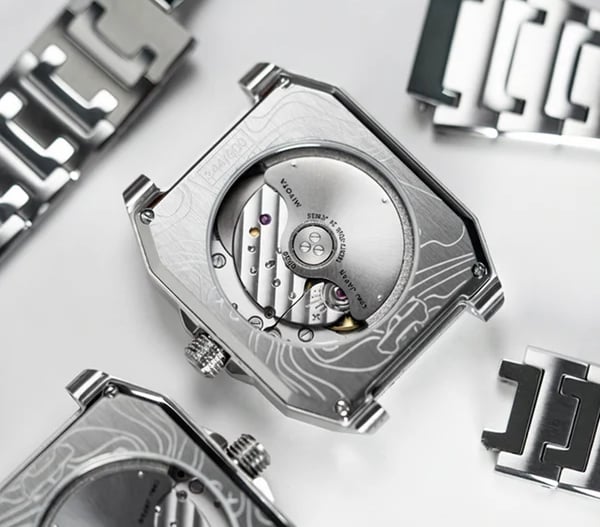
Miyota 9039 Automatic Movement (4Hz / 28,800 bph)
Sapphire Crystal
10mm Thickness
Original Case Design
Limited Production Run of 500 Pieces
For the asking price, it is difficult to argue with the value proposition.
The inclusion of the Miyota 9039 is particularly noteworthy. It is a significant step up from the NH35 commonly found in watches at similar price points, offering a higher beat rate and a thinner overall package.
Combined with a sapphire crystal and a case measuring just 10mm thick, the Sierra delivers a specification sheet that would normally generate considerable enthusiasm within the Indian microbrand community.
Personally, I think it represents excellent value for money.
DWC Is Entering a Different Price Segment
One possible explanation is price.
Although ₹16,999 is competitive given the specifications, it still represents a noticeable step above what many buyers associate with Delhi Watch Company.
Over the years, DWC has built a reputation for delivering strong value in the ₹5,000 to ₹10,000 range. As a result, some buyers may simply be less comfortable spending nearly ₹17,000 on a DWC, regardless of how strong the specifications are.
This doesn't necessarily mean the watch is overpriced.
Rather, it suggests that customer expectations often take time to adjust when a brand moves into a higher segment.
The Design Doesn't Play It Safe
More than anything else, I suspect the design played a major role.
The Sierra is not another integrated bracelet sports watch. It is not a dive watch. It is not a familiar rectangular dress watch.
Instead, DWC chose to create something genuinely different.
The case draws inspiration from the B-pillar design of the original Tata Sierra, resulting in a shape that immediately stands apart from almost anything else in the Indian watch market.
That originality deserves credit.
At the same time, originality can be a difficult sell.
Many enthusiasts are willing to experiment at lower price points, but once prices start approaching ₹20,000, buyers often become more conservative. They want something versatile, familiar, and easy to wear in a variety of situations.
The Sierra asks buyers to embrace something unconventional, and not everyone is comfortable doing that.
Personally, I appreciate what DWC attempted here. Even if the design isn't for everyone, it is refreshing to see an Indian brand take a genuine risk rather than producing another variation of an existing formula.
Was the Tata Sierra Connection Strong Enough?
Interestingly, I also think the collaboration itself may have worked against the watch to some extent.
While the watch is officially inspired by the Tata Sierra, that connection isn't immediately obvious unless you are familiar with the design story behind it.
The references are subtle and abstract rather than literal.
Personally, I think the connection feels slightly stretched in places.
That isn't necessarily a criticism of the watch itself. In fact, one could argue that the subtle approach makes the Sierra more wearable because it avoids feeling like branded merchandise.
However, collaborations often rely on immediate recognition. Buyers should be able to look at the product and instantly understand the connection.
With the Sierra, that connection requires a bit more explanation than some enthusiasts may have expected.
Final Thoughts
I don't think the DWC Sierra failed because it was a bad watch.
If anything, it might be one of the most ambitious watches Delhi Watch Company has produced to date. The specifications are strong, the value proposition is compelling, and the design demonstrates a willingness to take risks that many brands would avoid.
At the same time, the watch highlights an important reality within the Indian enthusiast market.
Most buyers still gravitate towards familiarity.
A higher price point, an unconventional design, and a collaboration that relies on subtle references rather than obvious nostalgia created a combination that was always going to appeal to a narrower audience.
As for me, I think the Sierra offers excellent value for money and deserves credit for trying something different. Even though I understand why it didn't sell out immediately, I would rather see brands take risks like this than play it safe with every release.
Image courtesy: Delhi Watch Company (Delhiwatchcompany.com)
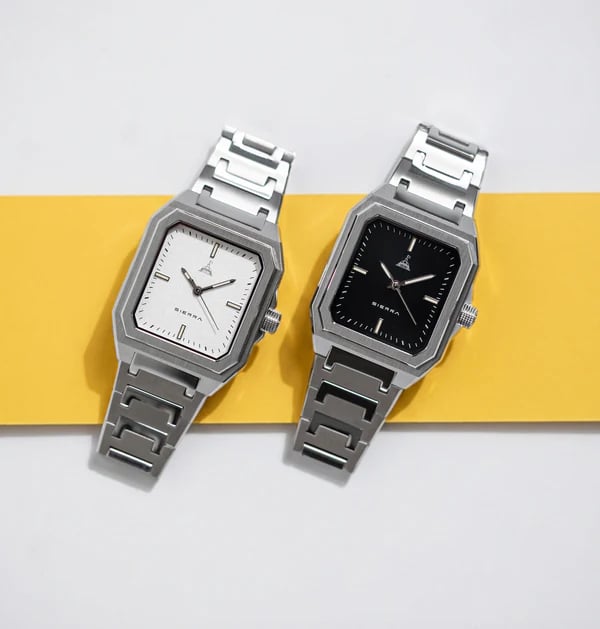


The DWC Sierra Twins
Caseback With The Miyota 9039 movement


The DWC Sierra Twins