The Dive Watch Paradox
The modern dive watch is built for environments its owner will likely never encounter.
Rohit Prabhu
5/22/20265 min read
There's a good chance the deepest water your dive watch has ever seen is your shower.
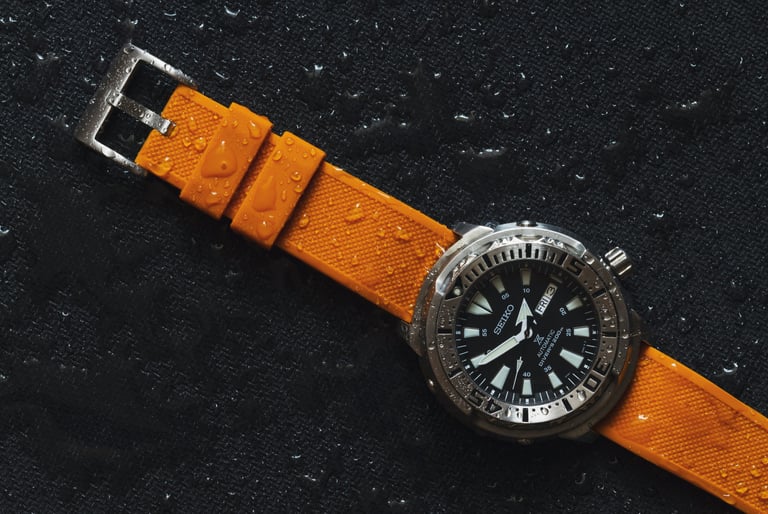
Maybe it's been caught in a heavy downpour. Maybe it's spent a few afternoons in the pool or a weekend at the beach. For most owners though that's about as adventurous as life gets. The rest of the time it's sitting under a shirt cuff in the office or resting on a desk next to a keyboard.
The funny part is that the watch itself was built for something completely different.
Most modern dive watches are rated to a minimum of 200 or 300 metres, with some specialized watches having ratings of thousands of meters. They have unidirectional bezels that let divers safely measure elapsed time and some even include helium escape valves for saturation diving, a type of commercial diving that very few people will ever experience.
Instead they're timing meetings, reminding us when the parking meter expires and telling us it's probably time for another coffee.
If that sounds like a waste, it really isn't. The fact that you'll probably never need everything a dive watch is capable of doesn't make it any less satisfying to wear. In many ways that's part of the appeal.
Built for the Ocean, Worn Everywhere Else
The dive watch began life as a serious tool.
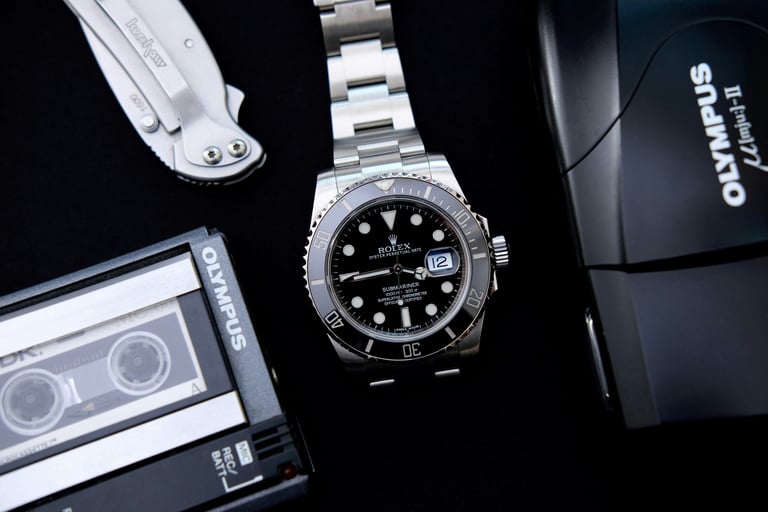
Early icons such as the Rolex Submariner and Omega Seamaster were designed for a specific purpose. Professional divers needed reliable equipment that could function in an environment where mistakes carried real consequences.
Legibility, durability, water resistance and timing capability weren't marketing features. They were practical requirements.
Over time, however, the role of the dive watch changed.
What started as specialised equipment gradually became one of the most popular watch categories in the world. Today, dive watches are worn by people who have never taken a scuba lesson, let alone descended hundreds of metres underwater.
The appeal has expanded far beyond diving itself.
The Reality of the Modern Dive Watch
Most dive watches will never experience the environment they were designed for.
They won't spend time in saltwater. They won't descend to meaningful depths. Many won't even see regular swimming.
Instead, they spend their days on wrists positioned over keyboards, steering wheels, and office desks.
Ironically, owners often treat these watches more carefully than watches with far lower water resistance ratings.
A basic quartz watch rated to 50 metres might be worn without a second thought. A 300-metre dive watch, despite being vastly more capable, is often protected from scratches, bumped cautiously around door frames, and inspected nervously after every minor knock.
The more capable the watch becomes, the more carefully it tends to be treated.
It's an interesting contradiction within the hobby.
I am guilty of this myself.
My Delhi Watch Company Havelock x DiveIndia is rated to 500 metres of water resistance and even comes with a helium escape valve. While it has seen its share of daily wear, the occasional rain shower, and the odd accidental knock against a door frame, it has never come close to the environment it was actually designed for.
Despite that, I still catch myself being careful around walls and checking the watch after a particularly hard bump. It makes very little sense when you stop and think about it. The watch was built to handle conditions far harsher than anything I will ever put it through, yet I often treat it more carefully than watches that are objectively less capable.
That probably says more about me than it does about the watch.
Then again, I suspect that's true for a lot of collectors. We buy tool watches because we appreciate what they're built to do, even if our own adventures are a little less dramatic.
Capability Matters, Even When You Don't Use It
The appeal of a dive watch today has less to do with diving and more to do with capability.
When people buy a dive watch, they aren't necessarily purchasing it for what they plan to do with it. They're buying it for what it can do if needed.
A dive watch communicates durability, reliability, and a sense of readiness. Whether that readiness is ever tested is almost irrelevant.
The same idea exists in many other areas of life.
People buy SUVs that rarely leave paved roads. Hiking boots spend years without touching a mountain trail. Toolkits sit untouched in garages waiting for a situation that may never arrive.
The value often comes from knowing the capability is there.
Dive watches operate in much the same way.
When Tool Watches Become Luxury Watches
Things become even more interesting when luxury enters the equation.
A true tool is expected to be used heavily. Scratches, dents, and wear are simply evidence that it is doing its job.
Luxury objects tend to be treated differently.
Once a watch becomes expensive, owners naturally become more protective of it. As a result, a watch engineered for harsh environments often ends up being shielded from the very conditions it was designed to handle.
Not because it can't survive them, but because replacing or repairing it would be painful.
The result is a slightly ironic situation where some of the toughest watches on the market are treated with the greatest care.
Why We Still Love Them
Despite all of this, the dive watch remains one of the most popular watch designs ever created.
Part of that comes down to aesthetics. Dive watches are versatile, legible, and generally work well in almost any setting.
But another part comes from what they represent.
A dive watch suggests capability. It suggests adventure, even if the closest it gets to adventure is a rainy commute. It connects the wearer to a history of exploration and professional tool watches, regardless of how the watch is actually used.
Most owners understand this perfectly well.
Nobody buying a modern dive watch genuinely expects to test its 300-metre water resistance rating. Yet knowing it's there remains part of the appeal.
Final Thoughts
The modern dive watch isn't really about diving anymore.
For most people, it's about having a watch that feels capable of far more than they'll ever ask of it. Whether it's 200 metres, 300 metres, or 500 metres of water resistance, the specifications offer a quiet sense of reassurance.
The irony is that many dive watches spend their entire lives as desk divers.
Yet somehow that doesn't diminish their appeal. If anything, it highlights why they're so popular.
Most of us don't buy dive watches because of where we're going.
We buy them because of what they represent.
Image courtesy:
Ern Gan/Unsplash
Valdemars Magone/Unsplash
Paul Cuoco/Unsplash