The Desk Diver Paradox: Built for the Ocean, Worn for the Office
The modern dive watch is built for environments its owner will likely never encounter.
3/29/20263 min read
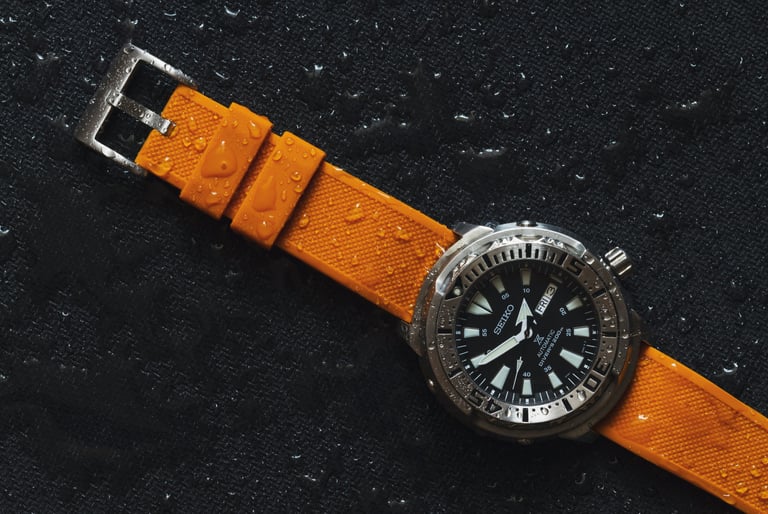
There’s a good chance the most extreme environment your dive watch has ever seen… is a shower.
Maybe the occasional monsoon dash, maybe a cautious dip in a hotel pool, followed by an immediate rinse and microfiber wipe like it just went through something serious.
And yet, sitting on your wrist is a machine built for depths you will likely never experience.
300 meters of water resistance.
A unidirectional bezel engineered for underwater timing.
A helium escape valve… for a scenario you will probably never encounter.
You, meanwhile, are timing your day in meetings and deadlines.
Built for the Ocean, Worn for the Office
The dive watch started as a tool. A serious one.
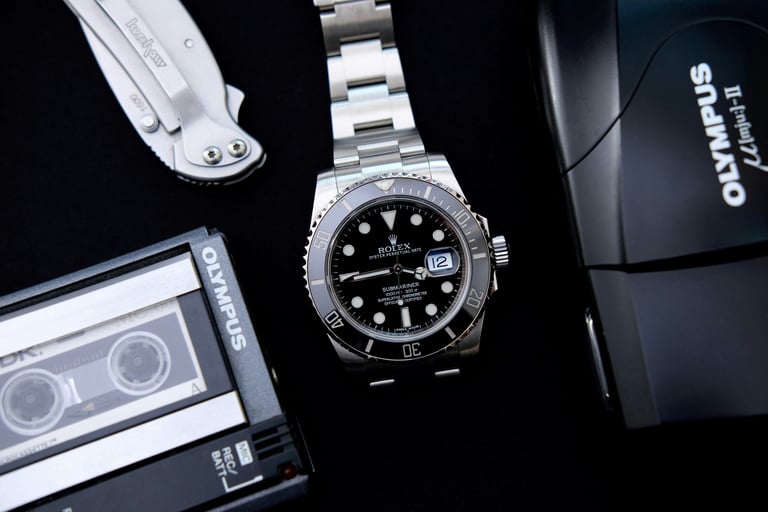
Think early pioneers like the Rolex Submariner or the Omega Seamaster—instruments designed for professionals who needed reliability underwater, where failure wasn’t an inconvenience, it was a problem.
Over time, something shifted.
The tool became a symbol.
The symbol became a category.
And the category became… a lifestyle accessory.
Today, the dive watch is arguably the most popular format in luxury watches. Not because everyone dives—but because everyone likes the idea of being the kind of person who could.
The Desk Diver Reality
Let’s be honest.
Most dive watches:
Don’t see saltwater
Don’t see meaningful depth
Don’t even see regular swimming
They see desks. Laptops. Steering wheels. Air-conditioned offices.
Owners debate scratch resistance, avoid door frames, and hesitate before even washing their hands with it on—despite wearing something that was literally designed for water.
A cheap watch rated to 50 meters will be used without a second thought.
A 300m diver? Protected like it’s fragile.
The more capable the watch, the more carefully it’s treated.
That’s the paradox.
Owning Capability vs Using It
This is where it gets interesting.
Because the appeal of the dive watch isn’t really about diving anymore. It’s about capability.
Owning a dive watch signals:
Ruggedness
Readiness
A kind of quiet, understated toughness
It says, “I could take this anywhere.”
Not “I do.”
And that distinction matters.
We’re not buying function—we’re buying the option of function. The identity that comes with it.
It’s the same reason people buy:
SUVs that never leave paved roads
Hiking boots that never see a trail
Toolkits that stay untouched
The value lies in what the object represents, not what it actually does.
The Luxury Twist
Luxury complicates things further.
Because once a tool becomes expensive, it stops being treated like one.
A true tool invites use. Abuse, even.
A luxury object invites preservation.
So now you have a watch engineered for harsh conditions… being shielded from daily life.
Not because it can’t handle it—but because you don’t want to test it unnecessarily.
The Irony We All Accept
And yet, none of this makes the dive watch less desirable.
If anything, it makes it more interesting.
Because everyone knows, on some level, that it’s overkill.
And that’s exactly the point.
The dive watch is a relic of purpose, repurposed for perception.
A tool that outgrew its tool-ness.
It doesn’t matter that it never dives.
What matters is that it could.
Closing Thoughts
The modern dive watch isn’t about the ocean anymore.
It’s about the quiet reassurance sitting on your wrist—that whatever your day looks like, your watch is built for more than you’ll ever ask of it.
And somehow, that’s enough.
Image courtesy:
Ern Gan/Unsplash
Valdemars Magone/Unsplash