
Seiko: The Brand That Changed Watchmaking
From humble beginnings to the Quartz Crisis and beyond, here's how Seiko reshaped modern watchmaking.
Rohit Prabhu
8/14/202614 min read
Wind your watch, pour yourself your favourite drink and settle in. This is going to be a long one.
If someone asked me to name the most influential watch company in history a few years ago, I probably wouldn't have said Seiko.
I'd have gone with one of the usual names. Rolex, Omega or maybe Patek Philippe. Seiko would still have been somewhere on the list because it's impossible to spend any amount of time around watches without coming across the brand, but I don't think I'd have appreciated just how much of modern watchmaking has been shaped by it.
That changed when I started reading about the company's history.
It wasn't because I was planning to write this article. If I'm being honest, it started out as simple curiosity. I own two Seikos and one evening I found myself trying to read a little more about one of them. One article led to another, then another, and before long I'd spent far more time reading about Seiko than I'd planned. Somewhere along the way it stopped feeling like I was reading about a watch company and started feeling like I was reading about the history of the industry itself. The two Seikos sitting in my watch box are very different watches.
The older one is a Seiko 5 Railway Time powered by the 7S26. It has been ticking away for decades and it still runs exactly as you'd expect it to. The 7S26 has never been the movement enthusiasts get excited about. It doesn't hack, it doesn't hand-wind and there are plenty of newer movements that look better on paper. None of that has made much difference to the watch. It has spent years doing the one thing it was built to do and it has done it well. Every time I pick it up after leaving it untouched for a few days, it comes back to life with a gentle shake as if nothing happened.
The other is my Seiko 5 Sports SRPD63K1. If you've spent a little time on Ticking Talk you've probably already seen it in the Gallery and I'll be publishing a full review soon. I already know what I'm going to say about it because I've been thinking about that watch for a while now. It isn't the strongest value proposition in its segment. There are watches with sapphire crystals, longer power reserves and specification sheets that look more impressive for similar money. Even knowing all of that, I'd still buy the Seiko again. I like the way it looks. That green dial is the reason I bought it in the first place and it's still the first thing I notice every time I wear it. Sometimes that's all the justification a watch needs.
Owning those two watches made me realise something that feels a little strange to admit. I'd spent years wearing Seikos without really knowing much about Seiko itself. I knew the broad outlines. The first commercially available quartz wristwatch. Grand Seiko. The Seiko 5. Beyond that, my knowledge was surprisingly shallow for someone who spent so much time reading about watches.
The more I looked into the company, the more often Seiko seemed to appear at moments that changed the direction of watchmaking. Sometimes it was because of a new movement. Sometimes it was a manufacturing breakthrough. Sometimes it was simply because the company saw the industry differently from everyone else. I don't think Seiko ever set out to become the brand that reshaped modern watchmaking but when you look back over the last hundred and forty years, it's difficult to tell that story without running into Seiko again and again.
That's what I want this article to explore.
Not every watch Seiko has ever made and not every milestone in the company's history. Plenty of people have already done that and done it well. What interested me far more was understanding how a company that started life as a small repair shop in Tokyo ended up influencing almost every part of the watch industry. Once I started putting the pieces together, I realised this wasn't really a story about Seiko alone. It's a story about how modern watchmaking became what it is today.
A Repair Shop in Tokyo
Every company has an origin story but most of them don't tell you very much. They're usually a collection of dates, names and places that get repeated so often they lose all meaning.
Seiko is a little different.
Kintarō Hattori opened his shop called K. Hattori in Tokyo in 1881 when he was just twenty-one years old. The business repaired and sold clocks and watches and at the time there was nothing particularly remarkable about it. Nobody could have looked at that small shop and predicted what would come over the next century.
What I kept coming back to while reading about Hattori wasn't his age or even his ambition. It was the fact that he started out repairing watches before he built them.
If you spend years taking apart watches made by other companies, you start to notice things. You notice which parts wear out first. You notice which designs make servicing easier and which ones make you wonder what the engineer was thinking. You also get to see what survives years of daily use and what doesn't.
That's a pretty good education if you eventually want to build watches yourself. You get hands on experience on what works and what needs to be modified.
Eleven years after opening his shop, Hattori founded Seikosha. The company began by making clocks before moving into pocket watches and later wristwatches. None of that happened particularly quickly. Reading about those early years, I was struck by how patient the whole process was. There wasn't one breakout product that suddenly turned Seiko into a household name. The company simply kept improving what it was already making.
It's easy to forget that because we already know how the story progresses, we have to remember that Seiko was nowhere close to being a big brand at this time.
By the time the early twentieth century rolled around, Seiko had become one of Japan's leading watch manufacturers. That was an achievement in itself but it didn't necessarily mean much outside the country, especially among collectors of high horology brands. If you wanted the best watches in the world, you still looked towards Switzerland. Brands like Patek Philippe, Longines and Omega had already built reputations that stretched across continents while Japanese watchmaking was still finding its place.
That probably made Seiko's job even harder.
It's one thing to build a good watch. It's another to convince people to take it seriously when they've already decided that the finest watches have to come from somewhere else.
One thing I noticed while reading about Seiko is that the company never seemed particularly interested in chasing prestige. It wasn't trying to imitate the Swiss or convince the world that it belonged in the same category. It just kept investing in better manufacturing, better engineering and better movements. Looking back, that approach feels almost boring because there isn't much drama to it. But a lack of drama meant Seiko had one thing on its side, stability.
By the 1950s and early 1960s, those years of steady improvement were starting to show. Seiko was producing increasingly sophisticated mechanical movements and wasn't content with simply being Japan's biggest watchmaker anymore. The company wanted to know how its watches compared with the very best in the world.
That meant going to Switzerland, not to source movements, not to learn from the competition but to directly compete with them by leveraging Japanese engineering.
Taking on Switzerland
When people talk about Seiko's biggest achievements, the conversation usually starts with quartz. That's understandable because the Astron changed the industry in a way that few watches ever have. We'll get to that soon enough.
What surprised me was discovering that Seiko had already earned the respect of serious watchmakers before quartz entered the picture.
The company had been quietly proving that its mechanical movements could compete with the very best Switzerland had to offer. This part of the story is less known and is not brought up nearly as much as the quartz story.
Back then, one of the best ways to prove the quality of a movement was to enter it into observatory trials. These weren't marketing exercises or popularity contests. Movements were tested over long periods in different positions and temperatures, with accuracy being the only thing that mattered. If your movement performed well, it was because the engineering behind it was genuinely excellent. There wasn't really anywhere to hide.
For decades, the names at the top of those competitions were almost always Swiss.
That wasn't particularly surprising. Switzerland had been refining mechanical watchmaking for generations while much of the world looked on with admiration. Precision wasn't just something Swiss companies aimed for. It had become part of their identity.
Seiko arrived as the outsider.
Reading about those competitions, I found myself wondering what the atmosphere must have been like. Imagine spending your entire career believing that the finest mechanical watches came from Switzerland only to watch a Japanese manufacturer steadily climb the rankings year after year. It probably didn't feel like much of a threat at first. Then the results kept improving.
By the late 1960s, Seiko wasn't just participating anymore.
It was competing.
One result in particular stood out to me. By the late 1960s, Seiko's entries were no longer there just to make up the numbers. They were competing with some of the finest Swiss movements ever produced and finishing near the very top of the rankings. For a Japanese manufacturer that much of the world still viewed as an outsider, that was a remarkable achievement. Long before quartz entered the conversation, Seiko had already shown it could build mechanical movements of the highest calibre.
I'd always assumed Seiko's reputation began with quartz. It turns out the company had already demonstrated that it knew how to build world-class mechanical movements before the Astron ever appeared.
The company didn't invent quartz because it couldn't make good mechanical watches. It invented quartz after proving that it could and it wanted to innovate further.
I think that's an important distinction because it's easy to imagine quartz as a shortcut. It wasn't. Seiko had already shown that it could compete with the finest mechanical watchmakers on earth. Choosing to pursue quartz wasn't an admission that mechanical watches had reached their limit. It was a decision to see whether there was another way to measure time.
With hindsight, we know where that decision led.
At the time, though, nobody could have predicted what was about to happen.
The watch that would change everything wasn't being built in Switzerland.
It was being built in Japan.
Innovation Didn't Stop with Quartz
One thing I hadn't really appreciated before writing this article was how easy it would have been for Seiko to become known as "the quartz company."
After all, most brands would be perfectly happy if they were remembered for creating one of the most important watches in history. That's the sort of achievement you can build an entire identity around.
Seiko never seemed interested in doing that.
The Astron was an enormous milestone but it wasn't the end of the story. If anything, it feels more like the point where Seiko became comfortable taking risks. Over the following decades the company kept experimenting, sometimes in ways that confused collectors as much as they impressed them. There were new movement technologies, new manufacturing techniques and a constant willingness to ask whether something could be done differently.
Not every idea became a success and that's perfectly fine.
I'd much rather read about a company that's willing to try something new than one that's content making the same watch over and over again with a different dial colour.
Spring Drive is probably the best example of that mindset. Trying to explain it properly here wouldn't really do it justice because it's one of those technologies that's fascinating enough to deserve an article of its own. The same goes for Kinetic. Both represent the sort of thinking I've come to associate with Seiko. Rather than choosing between mechanical and quartz, the company looked for entirely different ways of approaching the problem.
However, you don't have to love every decision Seiko makes to appreciate that it has never been afraid to go its own way.
Loving Seiko Doesn't Mean Ignoring Its Flaws
This would probably be a good time to admit something.
Seiko can be frustrating.
Spend five minutes on a watch forum and you'll see the same complaints appearing again and again. Prices have crept upwards over the years. Hardlex crystals continue to appear on watches where buyers expect sapphire. Bracelet quality isn't always where people want it to be and alignment issues have become something of a running joke in parts of the watch community.
Most of those criticisms are fair.
I've found myself agreeing with quite a few of them.
My SRPD63K1 isn't the strongest value proposition if you're only looking at specifications. There are watches at a similar price that give you much more on paper and I'll be talking about that in much greater detail when I publish my full review. If someone was building a spreadsheet to compare watches at a specific price point, I wouldn't be surprised if the Seiko lost in multiple categories, especially against microbrands.
I've handled plenty of watches that looked fantastic on paper but never really made me feel anything once they were on my wrist. The SRPD63K1 was almost the opposite. I knew exactly what it didn't have before I bought it. I still bought it because I liked wearing it. I don't think I'm alone in that.
Seiko has always seemed to understand that watches are emotional purchases as much as practical ones. Enthusiasts spend hours debating movements, crystals and water resistance but very few of us buy a watch because one specification is slightly better than another. More often than not, we buy the watch that makes us stop for a second when we see it in a display case.
Sometimes that's enough.
It's probably the reason my old Railway Time is still in my collection as well. There are objectively better watches in my watch box. They're more accurate, better finished and technically more impressive. That old Seiko isn't trying to compete with any of them. It has simply earned its place by being dependable for years without asking for much in return, not even regular servicing. That's a quality that doesn't show up on a specification sheet, it is proven with time.
A Name That Finally Got the Recognition It Deserved
The more I read about Seiko, the more I noticed a pattern.
The company rarely seemed interested in proving people wrong through advertising. It preferred doing it by building better watches.
Grand Seiko feels like the clearest example of that.
By the time Grand Seiko appeared in the 1960s, Seiko had already established itself as a capable watchmaker. It was producing reliable mechanical watches and earning respect for its engineering, but that wasn't really the point of Grand Seiko.
The goal was much more ambitious.
Seiko wanted to build a watch that could stand alongside the very best Switzerland had to offer. Not the best Japanese watch. The best watch, full stop.
That's a very bold thing to attempt when much of the world still believed that serious watchmaking belonged exclusively to Switzerland.
Reading about those early Grand Seikos, I found it interesting that the company wasn't trying to imitate Swiss brands. Of course there were influences, as there were across the entire industry at the time, but Grand Seiko slowly developed its own identity. The cases became sharper, the dials cleaner and the finishing reached a level that surprised people who had never looked beyond the name on the dial.
For a long time though, Grand Seiko remained something of a hidden gem.
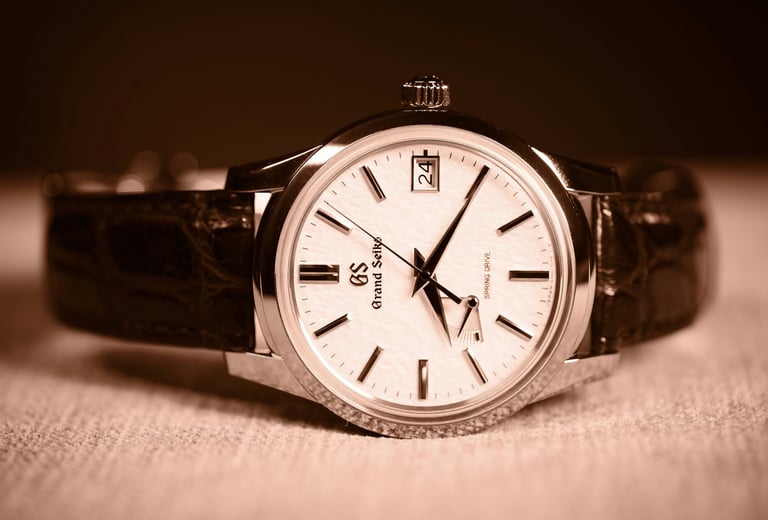
Collectors knew about it. Enthusiasts talked about it. Outside those circles, it never seemed to receive the same attention as the big Swiss names. I sometimes wonder whether the word Seiko on the dial worked against it. For decades people associated Seiko with affordable everyday watches, so convincing someone that the same company could produce a luxury watch wasn't always easy.
That perception has changed quite a bit over the last few years.
Today it's perfectly normal to see Grand Seiko mentioned alongside brands that would have seemed untouchable a few decades ago. Collectors talk about the finishing, the dials and of course Spring Drive with the same enthusiasm usually reserved for established Swiss manufacturers. Whether someone prefers a Grand Seiko to a Rolex or an Omega is really a matter of personal taste, but I don't think many people still question whether Grand Seiko deserves to be part of that conversation.
In a way, it feels like the rest of the watch world finally caught up with what Seiko had been trying to achieve all along.
Grand Seiko deserves far more than a few paragraphs and I'll come back to it in a future article. Trying to squeeze its history into this one wouldn't really do it justice.
What I do think is worth saying here is that Grand Seiko reinforces something that's come up again and again while writing this article.
Seiko has never been content standing still.
Whether it was competing with the Swiss in observatory trials, introducing quartz to the world or building a luxury watch that challenged long-held assumptions about Japanese watchmaking, the company kept pushing itself in different directions. Some ideas were more successful than others but standing still never really seemed to be an option.
That's probably why it's still one of the most interesting companies in watchmaking.
Looking at Seiko a Little Differently
When I first started reading about Seiko, I thought I was just filling in a few gaps in my own knowledge. I wasn't expecting it to change the way I looked at the watches sitting in my collection.
That old Seiko 5 Railway Time still does exactly what it did before I started researching this article. The movement hasn't become any more accurate and the scratches haven't magically disappeared. It's still just an old Seiko that's been quietly keeping time for years.
The SRPD63K1 hasn't changed either. I still know there are watches that offer more on paper for similar money and I'll go into all of that when I publish my full review. None of those things bother me any less than they did before.
The difference is that I understand where those watches came from.
It's easy to look at a Seiko and see an affordable everyday watch. Millions of people do exactly that and there's nothing wrong with it. Seiko has built its reputation on making watches that ordinary people can actually own and wear. That's always been one of the brand's greatest strengths.
Spend a little time reading about the company though and you start noticing something else.
You notice how often Seiko appears when watchmaking takes an unexpected turn. You notice how often the company decided to do something differently instead of following everyone else. Sometimes those decisions changed the industry. Sometimes they simply resulted in a better watch. Either way, Seiko never seemed particularly interested in doing things because that was how they'd always been done.
I think that's why so many collections end up with at least one Seiko in them.
Not because every Seiko is perfect.
Not because every Seiko represents unbeatable value.
And certainly not because every decision the company makes is universally popular.
People buy Seikos because they've earned a level of trust that takes generations to build. You know the watch on your wrist comes from a company that has spent well over a century making, improving and occasionally reinventing watches. Even if you never think about that history while wearing it, it's there all the same.
I started writing this article because I wanted to learn a little more about one of my favourite brands.
I finished it with a much greater appreciation for the company behind those watches.
The next time I pick up my old Railway Time or fasten my SRPD63K1 before heading out, I'll probably think about Seiko a little differently than I did before.
I hope you do too.
Unsplash: Lucas D.
Paul Cuoco
Ruben Caldera
Andy Kennedy
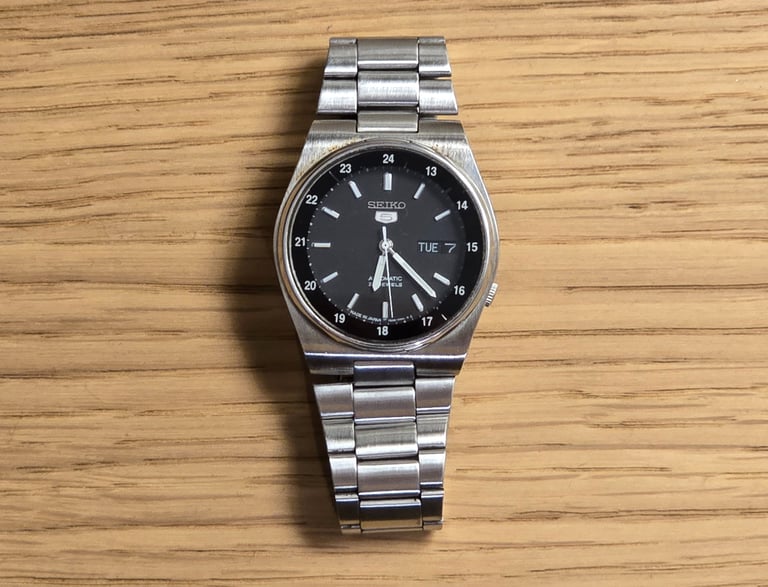
My Trusty Old Seiko 5 Railway Time
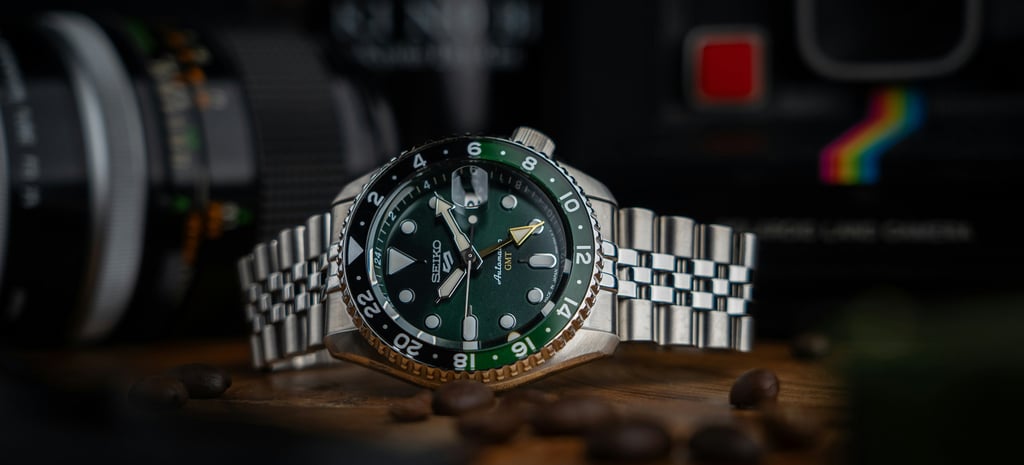
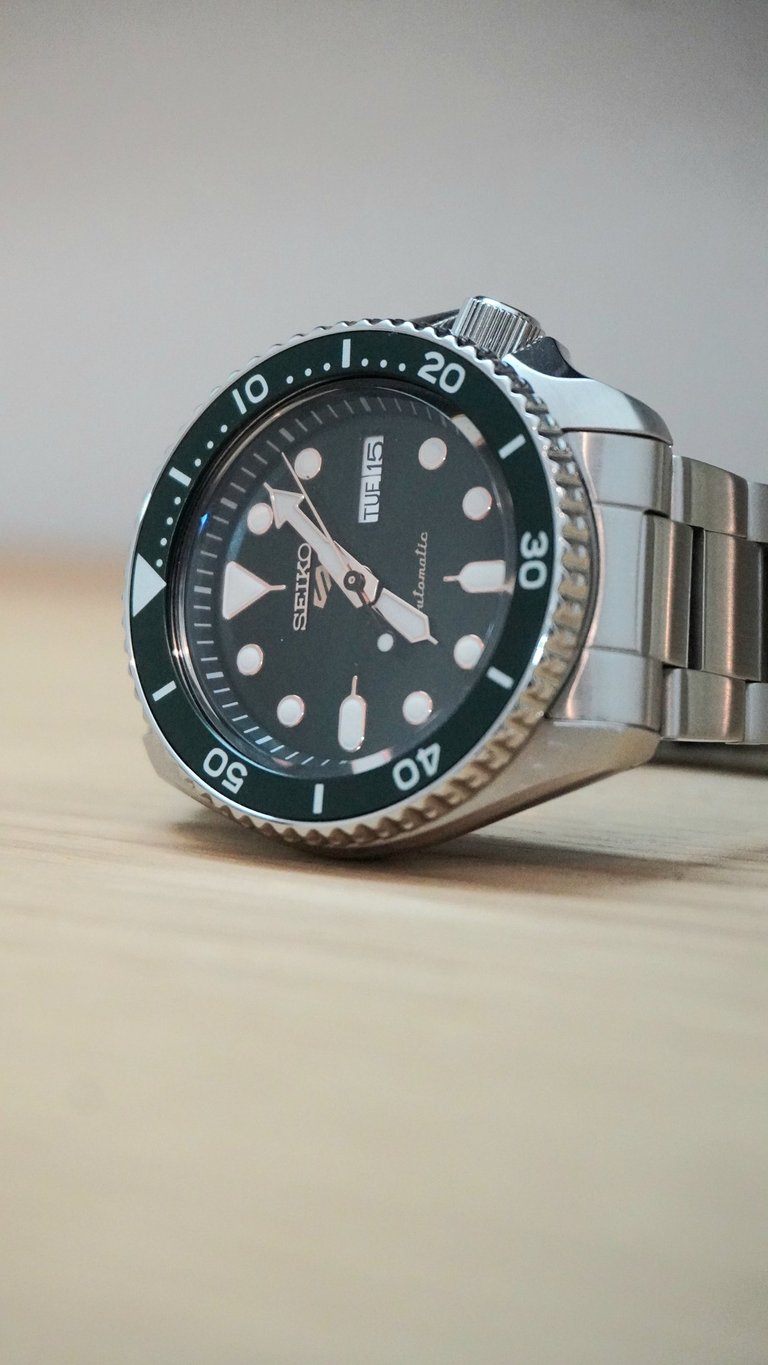
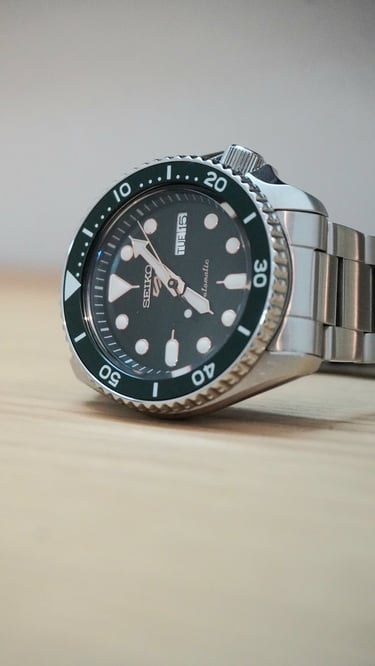
My Seiko SRPD63K1
My Seiko SRPD63K1