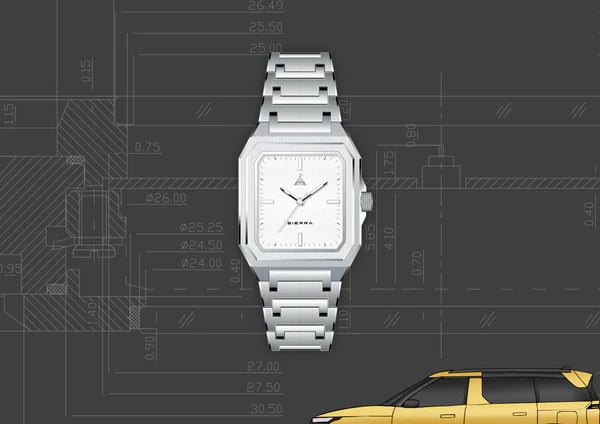
Delhi Watch Company Took a Risk With the Sierra. The Market Didn’t Fully Follow
This should have been an easy sellout. It wasn’t.
3/19/20263 min read
The collaboration between Delhi Watch Company and the iconic Tata Sierra was, on paper, one of the most exciting Indian watch releases in recent times. A limited run of 500 pieces, a nostalgic automotive tie-in and a completely original design language, it had all the ingredients of an instant sell-out.
But it didn’t.
Unlike most DWC automatic releases, the Sierra didn’t disappear within minutes.
In fact, as of 19th March 2026, units are still available in both dial variants. And that alone makes it worth discussing.
Specs That Punch Well Above the Price
Let’s get one thing clear, this watch is objectively a great deal.
At ₹16,999, you’re getting:
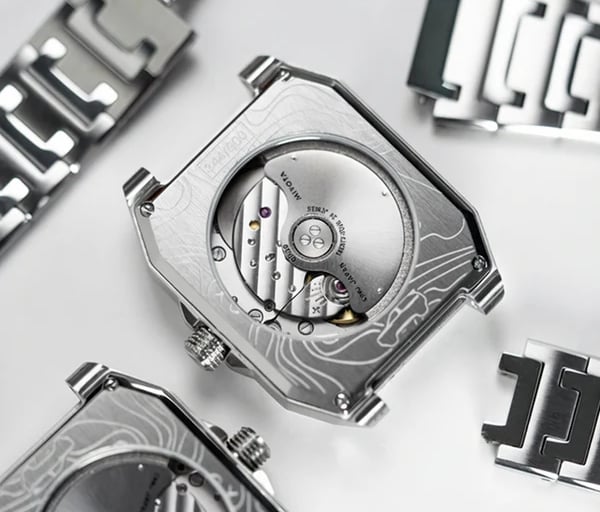
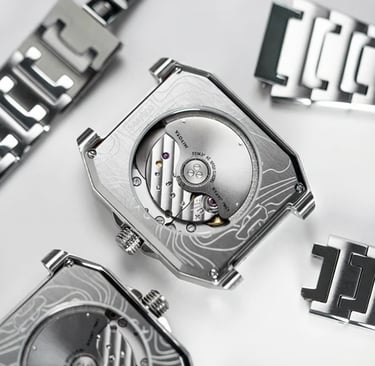
A 4Hz (28,800 bph) Miyota 9039 automatic movement
Sapphire crystal
Thickness of 10mm
A genuinely unique case design
For the price, this is seriously impressive.
In isolation, the Sierra offers the kind of mechanical value that would normally make it a no-brainer purchase in the Indian microbrand space.
And personally, I think it is an amazing deal.
So Why Didn’t It Sell Out?
The answer lies less in what the watch is and more in what buyers expected it to be.
1. Price vs Brand Comfort Zone
Even with strong specs, ₹16999 is still a psychological jump for many DWC buyers.
DWC has built its reputation on delivering value in the ₹5k–₹10k range. Moving into a higher bracket, especially with an unconventional design naturally creates hesitation.
It’s not that the watch isn’t worth it.
It’s that buyers aren’t fully used to spending that much on the brand yet.
2. A Design That Doesn’t Play Safe
This is probably the biggest factor.
The Sierra is not your typical rectangular “tank-style” watch. Its design is unconventional, drawing inspiration
from the B-pillar of the original Sierra,
which gives it a distinct and slightly unusual case shape.
And that’s where opinions split.
While I personally appreciate what DWC tried to do here, I also understand why many buyers held back. The design is unconventional, and with watches in this price range, people tend to prefer something safer and more versatile.
3. A Collaboration That Feels Subtle, Maybe Too Subtle
Interestingly, the collaboration itself may not have been as strong a pull as expected.
While this is officially tied to the Tata Sierra, the watch doesn’t immediately scream “Sierra” at first glance. The design cues are there but they’re abstract, not literal.
Personally, I think the connection is a bit of a stretch.
But that’s not necessarily a bad thing.
In fact, the subtlety arguably makes the watch more wearable. It avoids feeling like merchandise and instead stands on its own as a design piece. However, this also means it doesn’t fully capitalize on the nostalgia and instant recognisability that a collaboration like this typically relies on.
Final Thoughts
The DWC Sierra didn’t fail because it was a bad watch.
If anything, it might be one of the most interesting watches DWC has ever made, both in terms of design ambition and mechanical value.
But it also highlights something important:
The Indian watch buyer still leans towards familiarity over experimentation.
And that’s not necessarily a bad thing, just a reality.
As for me, I think the Sierra represents excellent value for money, and I genuinely respect the risk DWC took with the design. At the same time, I understand why the unconventional styling and slightly abstract collaboration held people back.
And maybe that balance, between bold intent and cautious buyers is exactly why it didn’t sell out.
Image courtesy: Delhi Watch Company (Delhiwatchcompany.com)
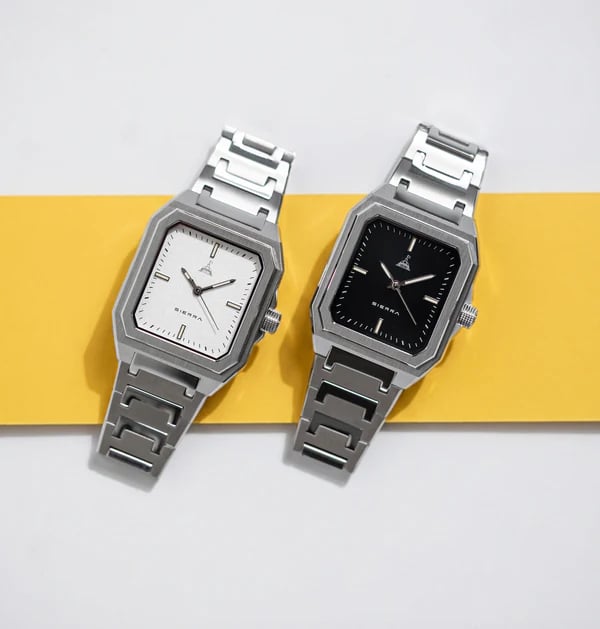
The DWC Sierra Twins
Caseback With The Miyota 9039 movement